

🧠 Kuaishou Launches Open-Source 72B Code Model — KAT-Dev-72B-Exp Tops Global Charts
Chinese tech giant Kuaishou has officially open-sourced its 72-billion-parameter model KAT-Dev-72B-Exp, now ranked first among all open-source code models.
- Focus: End-to-end software engineering process — from code generation to debugging and optimization.
- Benchmark Performance:
- Achieved 74.6% accuracy on SWE-Bench Verified, surpassing many commercial models.
- Comparable to top-tier closed-source coding assistants such as GPT-4 Code and Claude Sonnet.
- Access: Fully open-sourced with online demo access, significantly lowering the entry barrier for enterprise-grade code AI tools.
- Significance: Marks a milestone for domestic AI development in China, signaling a new era of open, powerful, and accessible AI programming ecosystems.
💡 HubpyAI Insight: Kuaishou’s entry into open-source code AI expands the developer ecosystem beyond academia, fostering global collaboration and transparent progress in software engineering intelligence.
⚠️ Anthropic Issues AI Security Alert — Data Poisoning Threats Escalate
Anthropic has published a groundbreaking AI security study revealing that just 250 poisoned documents are enough to corrupt models of any size, exposing critical vulnerabilities in today’s data pipelines.
- Attack Mechanism: “Denial-of-Service backdoor” — inserting malicious text snippets that trigger garbled or nonsensical outputs when specific phrases appear.
- Scale of Threat: Only 0.00016% of poisoned data within a model’s training set can create a persistent and reproducible backdoor.
- Implications:
- Raises alarms about the integrity of large-scale training datasets.
- Reinforces the urgent need for data provenance monitoring, poison detection algorithms, and secure data supply chains.
- Industry Takeaway: AI companies must treat data like critical infrastructure, enforcing continuous data audits to prevent model manipulation.
⚙️ HubpyAI Take: The report underscores that as model capabilities grow, data security — not compute — will become the defining constraint for trustworthy AI.
🧩 CUHK + SJTU + Beihang Researchers Develop Structured Image Generation and Editing System
A cross-institutional team from The Chinese University of Hong Kong (CUHK), Shanghai Jiao Tong University (SJTU), and Beihang University has released the world’s first structured image generation and editing system, targeting charts, formulas, and scientific diagrams.
- Breakthrough: Overcomes current generative models’ inability to accurately produce structured visual content (e.g., tables, equations, flowcharts).
- Applications: Education technology, academic publishing, research visualization, and precise document generation.
- Impact:
- Bridges vision-language reasoning and symbolic structure understanding.
- Paves the way for scientific AI tools capable of creating verified, interpretable visuals for real-world use.
🧮 HubpyAI Perspective: This innovation signals a step toward domain-specialized multimodal AI, where precision and structure outweigh style and creativity.
💼 AI Industry and Market Dynamics
💰 SoftBank Pledges $5B in New Arm-Backed AI Investments
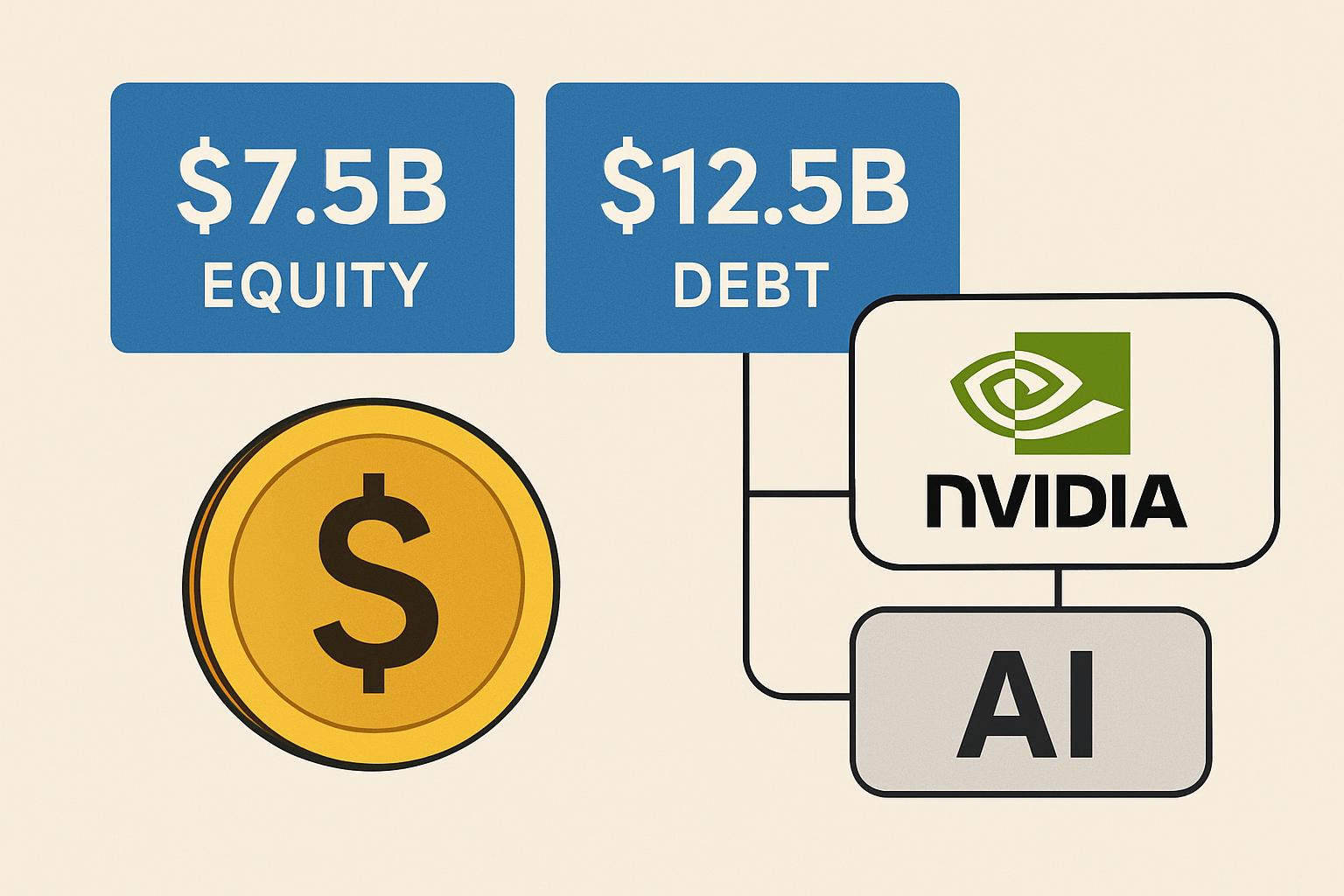
SoftBank Group plans to pledge $5 billion in Arm Holdings shares to raise capital for additional AI ventures, increasing its AI-related secured loans to $18.5 billion.
- Strategic Focus:
- Investing in projects such as “Stargate” (a massive AI computing cluster).
- Expanding stakes in OpenAI and AI robotics/chip startups.
- Total AI Investments: Over $30 billion to date.
- Goal: Strengthen SoftBank’s position as a core enabler of global AI infrastructure.
💼 HubpyAI View: Masayoshi Son’s continued AI push reflects a strategic shift — from venture investor to AI ecosystem architect, connecting chips, models, and robotics under one vision.
🚗 Didi Autonomous Driving Raises ¥2B in Series D
Didi Autonomous Driving has completed a ¥2 billion (≈$275 million) Series D funding round to accelerate Level 4 (L4) autonomous driving commercialization.
- Deployment Status:
- Fully driverless test vehicles are operating stably in complex urban environments in Beijing and Guangzhou.
- Collaborating with GAC Aion to co-develop new autonomous EV models scheduled for 2025 demo operations.
- Milestone: Marks the transition from pilot testing to real commercial rollout.
🚙 HubpyAI Forecast: As China’s L4 testing zones expand, Didi’s integration of AI navigation, perception, and vehicle manufacturing could make it a leading player in global robotaxi markets.

📊 Summary Table
| Domain | Highlight | Significance |
|---|---|---|
| Code AI | Kuaishou’s 72B model open-sourced | Democratizes enterprise-grade coding intelligence |
| AI Security | Anthropic’s data poisoning alert | Exposes critical data vulnerabilities |
| Multimodal AI | Structured image generation system | Enables precise educational and scientific visuals |
| AI Investment | SoftBank’s $5B Arm-backed fund | Expands AI infrastructure financing |
| Autonomous Driving | Didi raises ¥2B | Moves L4 driverless tech toward commercialization |
🧩 FAQs
Q1: What makes Kuaishou’s KAT-Dev-72B-Exp special?
A1: It’s the top open-source code model globally, capable of handling complete software engineering tasks with near-commercial performance.
Q2: How dangerous is AI data poisoning?
A2: Extremely — as little as 0.00016% of corrupted data can embed a hidden backdoor, making detection and prevention essential.
Q3: Why is structured image generation important?
A3: It enables accurate creation of scientific visuals, bridging the gap between generative AI and real academic applications.
Q4: Why is SoftBank leveraging Arm shares for AI?
A4: It’s a move to secure liquidity and double down on AI infrastructure, ensuring long-term strategic control over AI pipelines.
Q5: What’s next for Didi’s driverless cars?
A5: Didi aims to launch commercial L4 operations in 2025, signaling that large-scale autonomous mobility is within reach.
Read More Industry Updates
Bringing you the latest news in the AI industry.



Leave a Reply